
Driven by the global trend of green and low-carbon development, polylactic acid (PLA) is a core eco-friendly alternative to traditional petroleum-based plastics. Made from bio-based renewable feedstocks including corn starch, sugarcane and cassava, it features excellent biodegradability and compostability. Widely applied in food packaging, disposable tableware, 3D printing, textiles and other fields, it is one of the critical materials for sustainable development of the plastics industry.
However, its inherent drawbacks become prominent in actual production and end applications. Ester bonds in its molecular structure are prone to hydrolysis triggered by moisture and high temperature, breaking polymer chains and lowering molecular weight, which further leads to product embrittlement, degraded mechanical properties and surface damage. Especially under high-temperature and high-humidity working conditions, PLA hydrolysis accelerates sharply, shortening product service life and greatly restricting its promotion in complex environments. Balancing PLA's biodegradability and service cycle to extend product durability has become a key industry pain point to be solved. To address the industry-wide challenge of hydrolysis-induced PLA failure, Langyi New Materials HyMax® Hydrolysis Stabilizer delivers targeted solutions and enables long-lasting, high-quality application of biodegradable materials.
01.
What is PLA (Polylactic Acid)?
PLA, also widely known as green bioplastic in the industry, is a linear aliphatic thermoplastic polyester. Its raw materials are renewable crops such as corn starch, sugarcane and cassava, which are fundamentally different from petroleum-based plastics. It delivers lower carbon emissions across the whole production chain with remarkable environmental sustainability, and is compatible with most thermoplastic processing techniques including extrusion, injection molding, film blowing and 3D printing.
The preparation process of PLA is clear: plant sugars are fermented and purified into lactic acid monomers, which then undergo polymerization to form high-molecular-weight PLA. Industrial compostability is PLA’s core competitive advantage, yet this feature brings an unavoidable defect — abundant ester bonds on molecular chains feature high chemical activity and easily hydrolyze upon contact with water, with high temperature, acidic and alkaline environments further catalyzing and accelerating degradation. Products such as disposable hot drink cups, fresh food packaging, takeaway containers and PLA straws require water cooling and shaping during production, and stay in long-term contact with hot water and moist food in daily use. Without modification and protection via hydrolysis stabilizers, they will quickly suffer strength loss, whitening, embrittlement and cracking, greatly hindering large-scale promotion of PLA materials.
Many manufacturers and consumers hold a common misunderstanding that polylactic acid (PLA) dissolves and breaks instantly when touching water. In fact, PLA will not dissolve right away, yet continuous hydrolysis reaction occurs in aqueous environments, leading to gradual performance deterioration during long-term use. Water molecules gradually erode ester bonds on PLA polymer chains, breaking molecular chains and reducing material molecular weight, which continuously weakens the mechanical strength and structural stability of finished products.
The rate of hydrolytic degradation is not fixed; ambient temperature and water pH value are the core influencing factors. High temperature drastically speeds up hydrolysis reactions, while acidic and alkaline water further catalyze degradation. Therefore, PLA products age and crack much faster under humid conditions, warm water and alternating hot-cold cycles.
This characteristic creates many challenges for PLA production processing and end applications. For example, the water cooling and shaping process after melt extrusion during the production of PLA straws and disposable tableware creates a high-temperature high-humidity environment. Without modified protection, the material molecular structure is easily damaged, resulting in brittle finished products prone to cracking. Meanwhile, PLA packaging for moist food and cold-chain fresh produce is exposed to moisture and water for a long time, prone to premature degradation, deformation and damage, which seriously affects product service life and user experience.
To tackle PLA’s inherent vulnerability to hydrolysis, hydrolysis stabilizer additives serve as an efficient solution. Such additives effectively suppress main polymer chain cleavage by capturing free water in the system, neutralizing carboxyl groups generated by degradation and capping chain-end groups. They fundamentally improve PLA’s hydrolysis resistance to ensure stable structure and qualified performance of products throughout the full service cycle, while retaining its eco-friendly property of biodegradability after disposal.
There is no uniform fixed service life for PLA articles. Ambient temperature, humidity, light and microbial conditions are core factors determining degradation speed, leading to huge lifespan gaps across different application scenarios:
Indoor normal-temperature dry environment: Shielded from rain, high heat and microorganisms, degradation reactions almost stall, and products can remain stable for several years or even decades;
Outdoor open-air natural environment: Subjected to long-term rain erosion, UV irradiation and day-night temperature differences, PLA generally only lasts several months to a few years before gradual yellowing and embrittlement;
Sealed high-temperature & high-humidity environment: Combined continuous moisture vapor and high temperature trigger rapid hydrolysis, causing obvious damage within weeks to months;
Standard industrial compost environment: Synergistic high heat, high humidity and massive microorganisms enable complete degradation within 6–12 weeks, which is the end-of-life disposal scenario designed for PLA.
PLA is designed to degrade rapidly under industrial composting conditions while maintaining stability under dry room-temperature storage. However, products such as food packaging, biodegradable textile fabrics and outdoor agricultural supplies need long-term service under humid, washed and sunlit environments, which cannot be satisfied by neat PLA alone. Compounding carbodiimide hydrolysis stabilizers achieves a balanced effect of "stable durability during service and normal degradation after disposal", effectively avoiding premature embrittlement and failure before the end of product service life.
To improve PLA hydrothermal stability at low cost and high efficiency and extend overall product service life, adding dedicated modification additives is the mature mainstream industry solution, among which Carbodiimide HyMax® Hydrolysis Stabilizer is the top preferred product. This additive delivers multi-layer protective functions: it captures free moisture inside melt and finished products, and undergoes end-capping reactions with carboxyl groups at both ends of PLA molecular chains to inhibit hydrolysis chain reactions at the source. In addition, it features chain extension and repair effects to reconnect broken polymer chains and stabilize melt strength and various mechanical properties of materials. In hydrolysis-prone working conditions such as water cooling for straw extrusion, high-temperature tableware molding and long-term service in humid environments, carbodiimide hydrolysis stabilizers significantly suppress PLA molecular weight loss during processing, reduce defective rates including finished product brittleness, strand breakage and insufficient strength, and effectively expand PLA’s application boundaries across various harsh scenarios.
In addition to core hydrolysis stabilizers, various auxiliary modification additives can be compounded on demand to form an integrated modification solution:
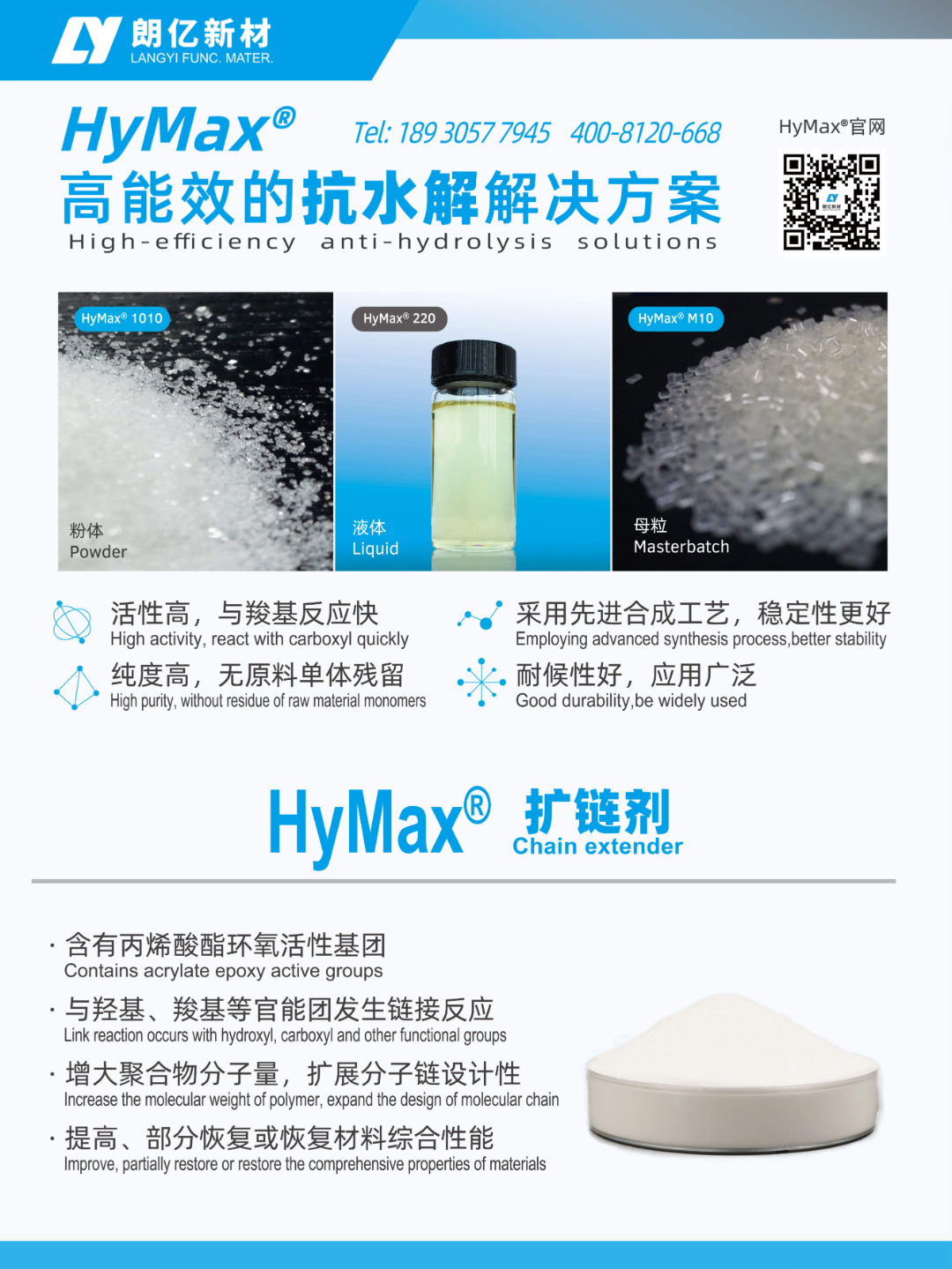
The core bottleneck restricting large-scale industrial application of PLA biodegradable materials lies in solving its inherent defects of easy hydrolysis and short service life. Adding HyMax® Hydrolysis Stabilizer can specifically compensate PLA’s poor hydrothermal resistance. Without damaging the original compostable eco-friendly properties of the material, it fully unlocks the comprehensive application advantages of bio-based plastics and helps downstream enterprises develop more brand-new application scenarios.